There is a particular kind of holiday decoration that manages to be cheerful and a little fierce at the same time, standing guard over a mantel with a painted grin and an unmistakable uniform. The nutcracker has held that strange, wonderful position in Christmas decor for well over two centuries, and its story reaches back to a remote stretch of German mountains where a struggling mining community turned hardship into one of the world’s most recognizable folk crafts.
The tradition traces to the Erzgebirge, or Ore Mountains, a region straddling the border of eastern Germany and the Czech Republic. For centuries, the area thrived on mining silver, tin, and other precious metals, supporting entire communities built around the industry. By the late seventeenth and early eighteenth centuries, though, those mines had largely been exhausted, leaving miners and their families searching for a new way to make a living through the region’s long, difficult winters. Many turned to a skill they already knew well from shoring up mine shafts and working with tools underground: woodcarving.
What began as small toys and functional household items gradually evolved into something more distinctive. Early nutcrackers were simple, practical devices, often shaped like animals, birds, or ordinary figures, meant to do exactly what the name suggests. 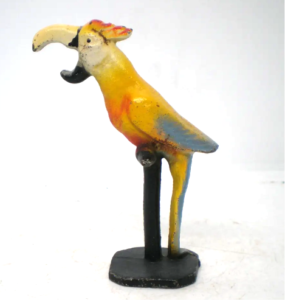 around the late seventeenth or early eighteenth century, though, Erzgebirge craftsmen began carving their nutcrackers in the image of kings, soldiers, and other figures of authority, and the choice was rarely a compliment. Reducing a king or a policeman to a wooden toy whose entire purpose was cracking nuts between its teeth carried a clear undertone of satire, a quiet joke aimed at the ruling classes from craftsmen who had little power of their own. Some of the era’s designs even took aim at specific public figures, including Napoleon, once his armies had made their way through German territory.
Alongside the political humor, a gentler folklore grew up around the nutcracker as well. Its fierce, wide grinning face was said to ward off evil spirits and bad luck, standing sentry over a household and protecting the family within. Given as gifts, nutcrackers were believed to bring good fortune to whoever received one, a tradition that helped cement their place as a meaningful holiday gift rather than a simple toy.
The craft grew increasingly intricate over the following century. Production became concentrated in towns like Seiffen, deep in the Erzgebirge, where entire families of artisans specialized in different stages of the process, from carving to painting to final assembly. A well made traditional nutcracker could require dozens of individual pieces fitted together with real precision, some accounts putting the number as high as sixty or more. One particularly influential design came from the workshop of the Füchtner family in the mid-1800s, whose nutcracker wore a crown reminiscent of a traditional miner’s cap and a brightly painted uniform dotted with fine detail, a look that still influences how many nutcrackers are styled today.
Through the nineteenth century, nutcrackers spread well beyond their mountain origins, sold at German Christmas markets and gradually adopted across the country as a holiday staple. Nuts themselves were a common seasonal treat at the time, which made a decorative nutcracker a natural fit for the Christmas table as both a useful tool and an eye catching figure to display through the season.
The nutcracker’s leap beyond Germany owes a great deal to two very different forces arriving decades apart. The first was Pyotr Ilyich Tchaikovsky’s ballet The Nutcracker, based on E.T.A. Hoffmann’s 1816 story The Nutcracker and the Mouse King, which premiered in 1892 and gradually introduced audiences well beyond Germany to the image of a toy soldier come to life. The second, and arguably more direct, push came after the Second World War, when American soldiers stationed in Germany brought handcrafted Erzgebirge nutcrackers home as souvenirs. As the Nutcracker ballet grew into a beloved American holiday tradition through the middle of the twentieth century, demand for the wooden soldier figures grew right alongside it, and German workshops found themselves supplying an entirely new market across the Atlantic.
By the second half of the twentieth century, nutcrackers had become a fixture of American Christmas decor, standing alongside stockings and tree ornaments in homes that had no connection to Germany at all. Import companies worked to keep pace with demand, and German artisans began producing new themes and styles that blended their traditional craftsmanship with the sensibilities of a new generation of buyers.
Interest in nutcrackers as genuine collectibles gained further momentum in the 1990s, following German reunification, which reopened export markets and renewed appreciation for authentic, handmade Erzgebirge craftsmanship. 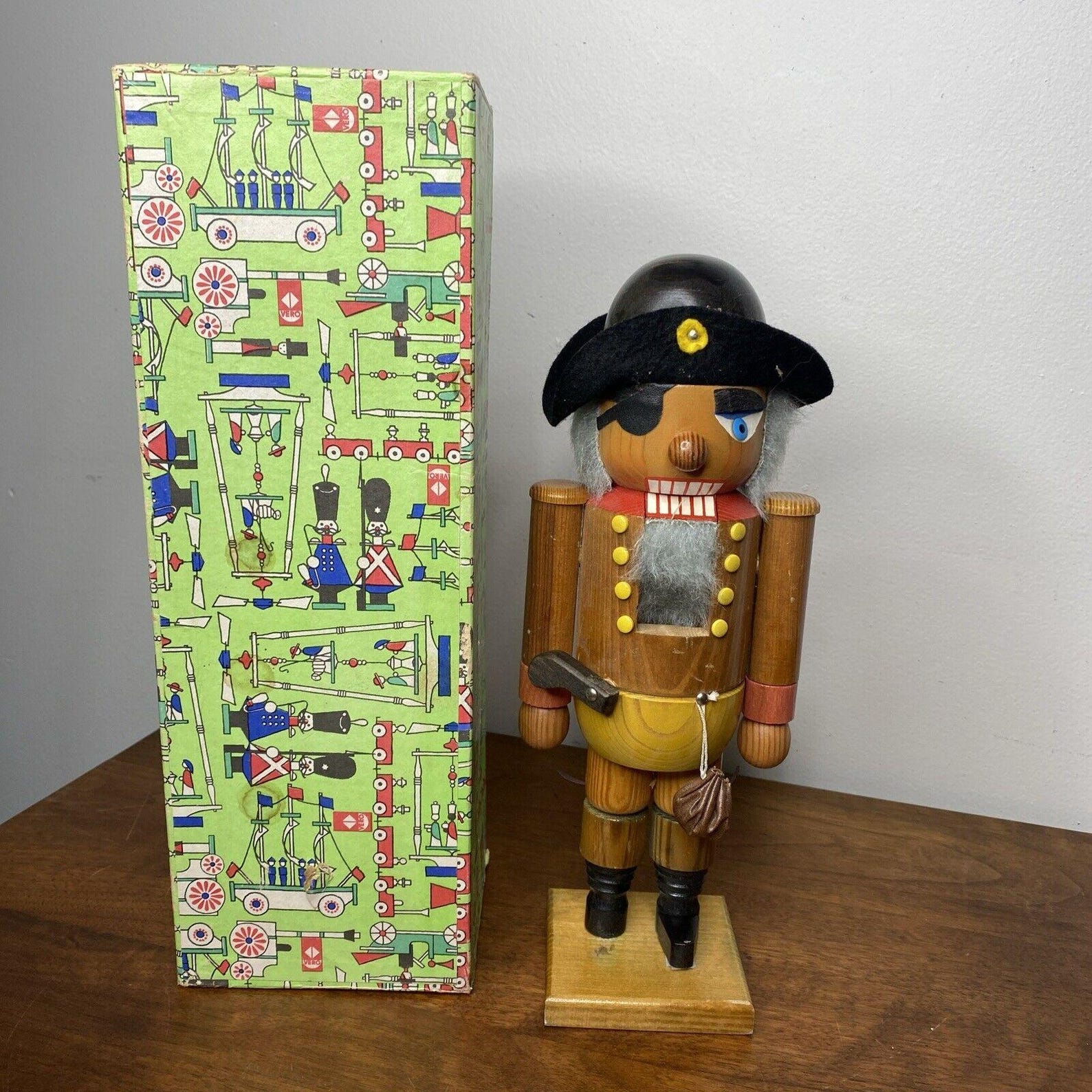 For many collectors, a nutcracker carries something deeper than seasonal decor. It represents a tangible link to a grandparent’s mantel, a childhood Christmas, or a tradition passed carefully from one generation to the next, which is part of why hand carved German examples continue to command the highest interest and value among collectors today.
What makes the nutcracker such an enduring piece of holiday decor is really the same thing that made it compelling in the first place. It is a small wooden figure with an oversized personality, equal parts guardian, gift, and quiet joke on the powerful, carved by hand in a tradition that has barely changed in its essentials for more than two hundred years.
For anyone drawn to that same handcrafted charm this holiday season, there are meaningful ways to bring a piece of the tradition home. An original handcrafted Erzgebirge nutcracker carries the genuine detail and heritage collectors search for. For those building a themed collection, a[vintage or antique German nutcracker offers real history alongside its decorative charm, and a set of nutcracker Christmas decorations rounds out a mantel or tree with the same festive, time honored spirit that has made the nutcracker a holiday favorite for generations.