There is something satisfying about the solid thud of metal against a wooden door, a sound that has announced visitors for thousands of years before anyone ever thought to wire a doorbell. The door knocker is one of those small architectural details that people rarely notice until they are standing right in front of one, yet its story stretches back further than almost any other piece of hardware still found on the average front door today.
The earliest known door knockers trace to ancient Greece, where etiquette mattered a great deal to the wealthier residents of cities like Athens. Arriving unannounced at someone’s home was considered a serious breach of manners, and rather than shout from the street the way their Spartan neighbors reportedly did, sophisticated Athenians preferred a quieter, more dignified solution. Wealthy households often assigned a slave to answer the door, chained to a heavy metal ring fixed to the entrance for exactly that purpose. Visitors would rap that ring or a short iron bar against the door to get the attendant’s attention, which is, by most accounts, how the very first door knockers came to exist at all.
The Romans adopted the same basic custom and carried it across their empire, and heavy metal rings remained the standard front door fixture for centuries afterward. Archaeological finds from this period include bronze rings and animal head fixtures shaped like lions  and griffins, uncovered at sites across the Mediterranean, evidence that even these early knockers were often more than purely functional. Many carried genuine symbolic weight, believed to guard the threshold of a home against evil spirits, a belief that would echo through door knocker design for centuries to come.
That protective symbolism took on a distinctive new form during the medieval period, particularly across Islamic Spain and the wider Mediterranean world, where a palm shaped design known as the Hand of Fatima became a common motif for door knockers. Rooted in Islamic tradition, the open hand was believed to ward off the evil eye and protect the household behind it, and hand shaped knockers spread from Spain into neighboring regions of southern Europe, a design still found on doors across the Iberian Peninsula and southern France today.
Elsewhere in medieval Europe, door knockers became closely tied to status and craftsmanship. Blacksmiths shaped lions, dragons, angels, and other figures out of iron, each piece carrying the particular mark of the smith who made it, and the more elaborate the design, the more it signaled the wealth and standing of the household it guarded. A castle or a fine townhouse without a suitably impressive knocker would have seemed distinctly out of place among its neighbors.
The material and style of door knockers continued shifting alongside broader changes in metalworking. Cast iron production improved the fineness and detail achievable in knocker design, and by the Georgian period in Britain, brass had overtaken iron as the material of choice among foundries producing fashionable door hardware. Georgian era knockers borrowed heavily from classical influences, drawing on ancient Greek goddesses, urns in the Adam style, and even Egyptian revival motifs following renewed European fascination with Egypt, giving homeowners an entire catalog of historical styles to choose from.
It was during the Victorian period, though, that the door knocker reached its most flamboyant expression. As industrial production made ornate brass casting more widely available, a beautifully detailed door knocker became a genuine statement of taste and prosperity, gracing the entrances of townhouses across Britain in particular, a country that has long embraced the door knocker more enthusiastically than almost anywhere else. Charles Dickens captured that Victorian fascination with a knocker’s presence in the opening pages of A Christmas Carol, describing Ebenezer Scrooge’s own front door knocker in enough vivid detail that it has become one of literature’s more memorable pieces of door hardware, transforming briefly into the ghostly face of Jacob Marley before Scrooge’s very eyes.
Certain knocker designs became so closely associated with a place or an office that they took on an identity all their own. The lion’s head knocker fixed to the door of 10 Downing Street remains one of the most recognized in the world, standing watch over the entrance used by generations of British prime ministers. Other traditional designs carried their own specific associations as well, including the classic doctor’s knocker once common outside a physician’s home or office, a small detail that once told visitors something practical about who lived behind the door before they ever had to ask.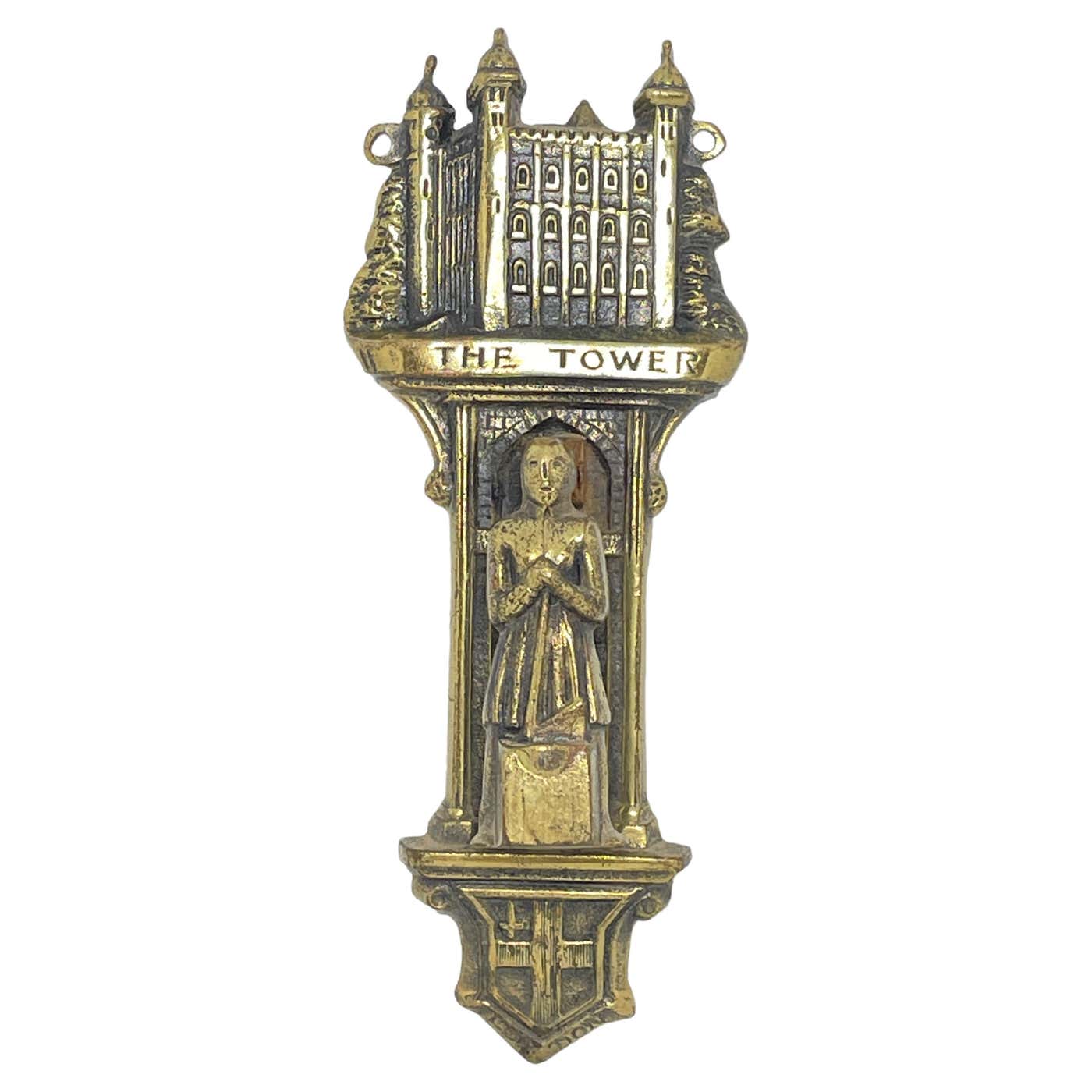
As door knockers crossed the Atlantic with European settlers, American homes adopted the same basic tradition, particularly in colonial era towns along the eastern seaboard, where brass knockers became a familiar sight on the doors of prosperous households. The custom carried the same underlying purpose it always had, announcing a visitor’s arrival with a respectful knock rather than an unannounced intrusion, even as the specific designs favored in America began to reflect local taste and craftsmanship rather than strictly following European fashion.
The rise of the electric doorbell in the late nineteenth and early twentieth centuries eventually gave homeowners a more convenient alternative, and door knockers gradually shifted from a practical necessity toward more of a decorative and traditional touch. Even so, the knocker never disappeared. Many homeowners kept one installed alongside a doorbell, valuing the warmth and character a well chosen knocker brings to a front entrance, something a small electronic button simply cannot replicate.
That enduring appeal is really what has carried the door knocker across so many centuries and civilizations. It is a small object, easy to overlook, yet it carries an outsized amount of history in its shape and material, whether that shape happens to be a Roman lion, a Spanish hand, or a Georgian urn. A door knocker announces more than a visitor. It quietly reflects the taste, era, and even the beliefs of whoever chose to hang it.
For anyone drawn to that same sense of history and craftsmanship today, there are meaningful ways to bring a piece of it home. An original antique brass or cast iron door knocker carries the genuine patina and character collectors search for. For those restoring a period home, a Victorian door knocker or Georgian style reproduction knocker captures the same traditional detail with the durability of modern materials, and a set of vintage inspired door hardware rounds out an entryway with the same timeless welcome that door knockers have offered visitors for thousands of years.