Few kitchen appliances have earned the kind of quiet devotion that the slow cooker inspires. Set it in the morning, walk away, and come home to dinner already made. That simple promise has kept a humble countertop crock in kitchens for more than half a century, and its story begins not in a test kitchen or a corporate lab, but with a family recipe passed down from a Lithuanian grandmother.
Irving Naxon, born Israel Nachumsohn in Jersey City in 1902, grew up hearing a story from his mother about life in her native Lithuanian town. Every Friday afternoon, in preparation for the Sabbath, his grandmother would fill a ceramic crock with beans, root vegetables, and a little meat to make a traditional stew called cholent. Since Jewish law prohibited cooking once the Sabbath began, the crock was carried to the local bakery and set inside the oven, which was then shut off for the evening. As the oven slowly cooled overnight, the stew cooked gently in the fading heat, ready to be picked up and eaten the next day. Naxon, who trained as an electrical engineer and became Western Electric’s first Jewish engineer, found himself wondering whether that same slow, gentle process could be recreated electrically, at home, without a bakery oven at all.
Naxon founded his own company, Naxon Utilities Corporation, and set to work turning that idea into a real appliance. He filed a patent for what he called a cooking apparatus in 1936, and it was granted in January of 1940. His invention, a squat ceramic crock fitted with a heating element wrapped around its inner chamber to promote even, gentle heat, went to market under a few different names over the years, including the Boston Beanery, the Naxon Beanery, and the Flavor Crock. True to its cholent inspired origins, the device was marketed largely to coffee shops and luncheonettes as a bean cooker, a fittingly narrow purpose for an appliance that would eventually prove capable of so much more.
Despite Naxon’s ingenuity, the Beanery never became the household sensation its inventor may have hoped for. Naxon himself stayed remarkably busy elsewhere, eventually amassing more than two hundred patents across his career, including a portable washing machine, an electric frying pan, and even an early version of the lava lamp. By 1970, ready to retire, Naxon sold his business and the Beanery’s patent outright to Rival Manufacturing, a Kansas City company already well known for kitchen gadgets like the Juice O Mat juicer.
At Rival, the humble bean cooker found new life almost by accident. According to accounts from the company’s home economics test kitchen, an employee named Marilyn Neill realized that the device Naxon had designed for beans could just as easily handle an entire meal, from pot roasts to whole 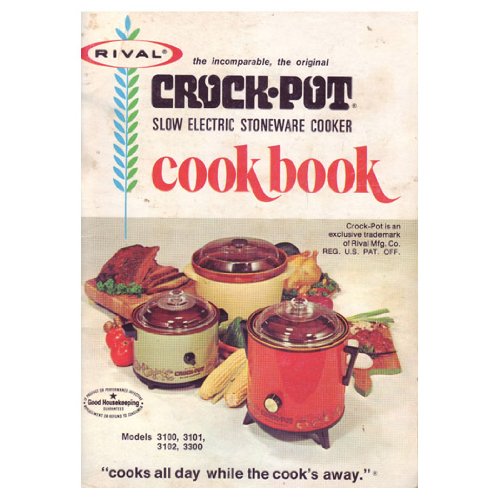 chickens to hearty stews. That realization set off a wave of recipe development and testing within Rival’s kitchens, as the company’s home economists worked to prove the appliance’s versatility well beyond its original purpose.
Rebranded and redesigned with a distinctly 1970s look, complete with colors like avocado green and harvest gold, the newly christened Crock Pot made its official debut at Chicago’s National Housewares Show in 1971. Rival aimed its marketing squarely at a demographic experiencing real change at the time: women increasingly working outside the home who still faced the expectation of putting a home cooked meal on the table each evening. Advertisements promised busy women they could, in the company’s own words, cook all day while the cook was away, framing the Crock Pot as a genuine solution rather than simply a convenience.
The pitch worked, and it worked quickly. Priced at twenty five dollars, the Crock Pot brought in two million dollars in sales during its first year alone. That number climbed dramatically over the following years, reaching ten million the next year and tens of millions more by the mid-1970s. Rival’s timing lined up perfectly with a period of real anxiety over energy costs following the oil crisis of 1973, and the company made sure to remind shoppers that a Crock Pot used roughly as much electricity as a single incandescent light bulb, a meaningful selling point at a moment when households were looking to cut costs anywhere they could. The device’s low, slow cooking method also happened to be ideal for tougher, more affordable cuts of meat, another quiet advantage during a recession that had many families watching their grocery budgets closely.
By 1975, Crockpot Cookery had become a genuine bestseller, published right alongside some of the era’s other defining titles and offering home cooks a steady stream of recipes for soups, stews, and roasts developed in Rival’s own test kitchen. In 1974, Rival further refined the design by introducing a removable stoneware insert, making cleanup considerably easier and cementing the basic shape that slow cookers still follow today.
The Crock Pot’s success reflected something larger happening in American households during the 1970s, as more women entered the workforce and families searched for ways to manage the competing demands of a job and a home cooked dinner. For many of these households, the appliance offered something that felt close to freedom, a way to provide a nutritious meal at the end of a long day without spending the evening standing over a stove. That appeal has proven remarkably durable. Decades after Rival’s 1971 debut, slow cookers remain a kitchen staple, produced now by a wide range of manufacturers, though the Crock Pot name itself, now owned by Sunbeam Products, is still used generically by many home cooks the way Kleenex or Band Aid became shorthand for their entire product categories.
Irving Naxon passed away in 1989, having spent his later career on inventions far removed from the kitchen, including sonar equipment developed for the Defense Department during World War II. Yet his original cooking apparatus, born from a memory of his grandmother’s Sabbath stew, quietly became one of the most recognizable kitchen appliances in American history, a reminder that some of the best inventions begin with nothing more than a family tradition someone couldn’t stop thinking about.
For anyone drawn to that same slow cooked tradition today, there are meaningful ways to bring a piece of that history home. A vintage 1970s Rival Crock Pot in classic avocado or harvest gold makes a charming find for collectors of retro kitchen appliances. For those who want the same low and slow cooking with modern conveniences, a modern programmable slow cooker carries the tradition forward with updated safety features and settings, and a set of slow cooker cookbooks and recipe collections rounds things out for anyone ready to put a little Sabbath inspired patience back into the evening meal.